

24 July 2026
The Benefits of Early Childhood Education
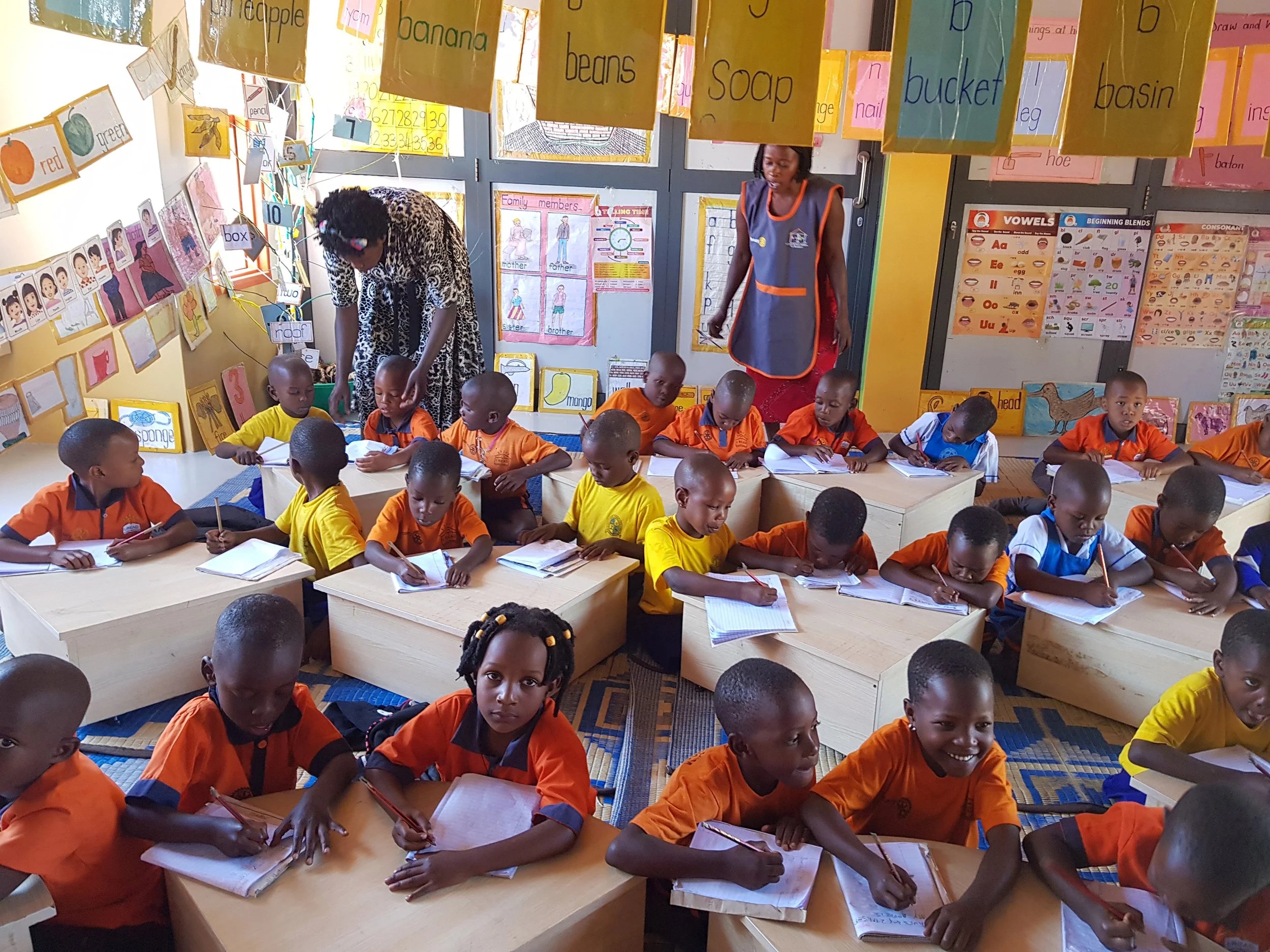
During early childhood, children learn how to learn.
Children construct knowledge through physical activity, social interactions with others, and their own active thinking.
When children have access to early childhood education, it creates a ripple effect of opportunity that influences generations to come. Education is key for communities to experience growth and stability.
Only 1 in 5 children has access
Globally, only half of children are enrolled in pre-primary education — and in low-income countries, that falls to just 17%.
198 million children need pre-school
Global net enrolment fell to 72% in 2022
An estimated 198 million children aged 3 to school-entry need childcare or preschool they can’t access.
This reversed a decade of progress. 250 million children in the developing world, under the age of five, are stunted, living in poverty, or both.
Early childhood education paves the pathway to a brighter future:

Higher intelligence scores

Higher school enrollment and competition rates

Improved nutrition and overall health

Improved social and emotional behaviour

Increased earning potential and economic self-sufficiency as adults and community members

Increased female labour force participation
Early childhood development improves primary school learning
Rigorous studies show that the first years of life are the most critical period for brain development, encompassing the acquisition of cognitive, social, and emotional skills. Children who benefit from quality early childhood development programs tend to learn better when they enter primary school and earn higher wages as adults.
Investing in the early years of a child’s life is one of the smartest things a country can do to eliminate poverty, increase shared prosperity, and stimulate economies to diversify and grow - learn more from the World Bank.
Early childhood experiences have a profound impact on brain development—affecting learning, health, behaviour and ultimately, income. Children who receive early learning in their formative, pre-primary years gain social and emotional competence and generally improve health. They also have higher school completion rates, higher incomes, and females are more likely to participate in the labour force. Globally, children who receive pre-primary education are more likely to send their own children to school, empowering them to create a generation of change and interrupting cycles of poverty.
Going to school teaches students socialization, communication, and community-building skills, which they carry into their families and their futures. Girls who attend school are less likely to marry early or against their will. Education empowers women to make life choices and strengthens girls’ beliefs in their ability to achieve goals.
Uganda took a major step forward in 2026 with the launch of its first-ever national ECCE Policy, committing to equitable access to quality early learning nationwide. Yet the gap remains stark: an estimated 84% of children aged 3–5 are still not receiving any form of early childhood education. Every pre-primary school in Uganda is privately run — there is no government provision — and formal daycare for children under 3 reaches less than 2% of children.
This is the gap IREAD’s 19 schools are working to close.
Source: Ministry of Education and Sports, Uganda — Education Statistics Abstract 2025 (EMIS); National Development Plan IV; ECCE Policy (2024); ECD Education Sector Strategic Plan 2025–2030.
In Pakistan, an estimated 25.1 million children aged 5–16 are out of school, and education spending has fallen to roughly 0.8% of GDP — a record low. Just 32% of primary schools offer any early childhood education, at a time when 37% of children under five are stunted, a condition directly linked to poor school readiness.
Our 53 ECD centres are reaching children in some of the hardest-to-access communities in the region.
Source: UNICEF Pakistan; Pakistan Economic Survey 2024–25, as reported by The Friday Times (April 2026). Recommend cross-checking the 32%/37% figures against the primary Economic Survey release before publishing, as they are currently sourced via a secondary news article.